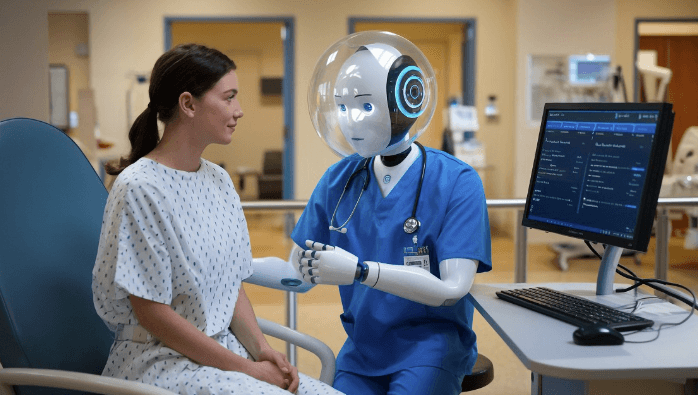
Robotics in healthcare is advancing within clinical workflows, enhancing precision in imaging, instrument control, and navigation. Data-driven, strategies focus on interoperability and standardized protocols supported by autonomous decision aids. Teams gain from augmented collaboration while care pathways remain central. Risk governance, ethics, and regulatory alignment anchor adoption, with credentialing and simulation-based training shaping competency. The trajectory suggests measurable patient outcomes and scalable implementations, yet key questions about integration, trust, and governance persist for stakeholders seeking clarity.
What Robotics in Healthcare Solves Today
Robotics in healthcare today directly addresses efficiency, precision, and safety across multiple clinical workflows.
The evidence base shows accelerated imaging analysis, improved instrument control, and standardized protocols.
Robotic autonomy reduces variability in bedside tasks, while surgical navigation enhances target accuracy and intraoperative decision support.
Clinicians weigh benefits against training and integration challenges, aligning deployments with measurable outcomes and patient-centric performance metrics.
How Robots Weave Into Clinical Workflows
Integrating robotic systems into clinical workflows hinges on aligning device capabilities with existing care pathways, data interfaces, and team routines to minimize disruption and maximize throughput.
The analysis emphasizes robot autonomy within multidisciplinary teams, ensuring patient consent is documented and respected.
Data interoperability enables seamless charting and imaging updates, while surgical precision buttresses standard protocols, performance metrics, and scalable adoption across diverse care settings.
Evaluating Risks, Ethics, and Regulation
Data-driven analyses quantify failure modes, reliability, and error propagation across care pathways.
Risk governance frameworks guide oversight, accountability, and auditing.
Patient consent considerations ensure transparency, informed choice, and alignment with evolving standards, while regulatory strategies balance innovation with safeguards and public trust.
The Roadmap: Skills, Training, and Adoption
What skills, training pathways, and adoption strategies will most effectively translate robotic capabilities into safe, reliable clinical practice? A data-driven framework maps roles, competencies, and governance to measurable outcomes. The careers roadmap outlines certifications, multidisciplinary collaboration, and ongoing QA. Training pathways emphasize simulation, credentialing, and competency-based milestones, driving scalable adoption while monitoring safety metrics and clinical impact across settings.
Frequently Asked Questions
How Will Robots Affect Patient-Provider Relationships in the Long Term?
Robot autonomy may reshape patient-provider dynamics, potentially enhancing efficiency while challenging nuance in empathy; data suggests patient rapport could either strengthen through consistent interfaces or weaken with perceived mechanization, requiring structured communication protocols and clinician-led oversight.
What Are Cost-Benefit Considerations for Small Clinics Adopting Robotics?
“Time is money,” notes show cost savings from robotics for small clinics, while evaluating upfront capital and maintenance. The analysis emphasizes workflow integration, return-on-investment timelines, training needs, and patient throughput impact in a data-driven, clinically oriented framing.
How Will Data Privacy and Cybersecurity Be Safeguarded in Robotic Systems?
Data governance establishes strict authentication, auditing, and encryption, while integration challenges are addressed through standardized interfaces and continuous risk assessment; safeguards emphasize in-robot and remote access controls, incident response, and transparent governance for clinicians seeking operational autonomy.
Can Robots Replace Human Judgment in Complex Clinical Decisions?
Robots cannot fully replace human judgment in complex clinical decisions; they serve as decision-support. Emphasizing robot ethics and algorithm transparency, practitioners should retain oversight, ensure data-driven validation, and preserve clinician autonomy for safe, freedom-respecting patient care.
See also: The Future of Renewable Energy Technology
What Are the Workforce Implications for Healthcare Professions Beyond Nursing?
Break the mold: robots shape roles beyond nursing, with shifts in therapists, technicians, and technologists. Robot ethics informs governance; clinical workflow integration ensures efficiency, data quality, and accountability, guiding workforce planning toward adaptable, evidence-based expansion across healthcare professions.
Conclusion
Robotics in healthcare is progressing toward greater precision and integration, subtly reshaping workflows without disrupting core care pathways. Data-informed governance and simulation-driven credentialing will steadily elevate safety and outcomes, while interoperable systems reduce friction across teams. By embracing incremental adoption, robust ethics, and clear regulatory alignment, institutions can cultivate trust, optimize resource use, and set the stage for scalable, patient-centric innovation that advances care with measured, dependable momentum.
